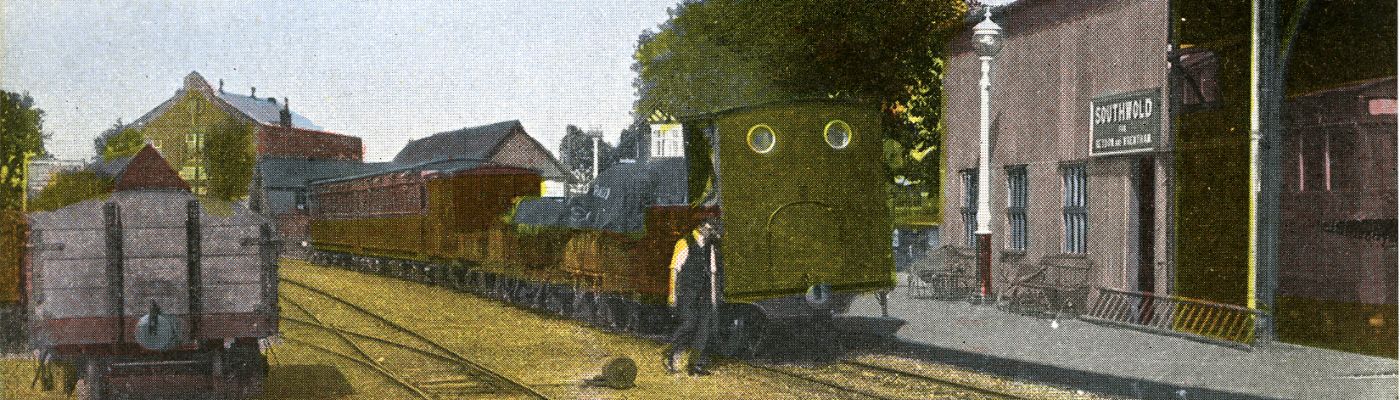
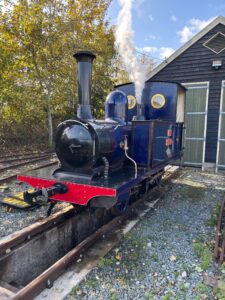
As the Trustees had approved the steaming of Blyth at our open day at the end of October, a few hardy volunteers congregated at Steamworks at 8:30am last Sunday.
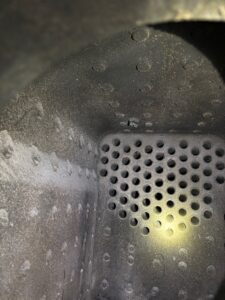
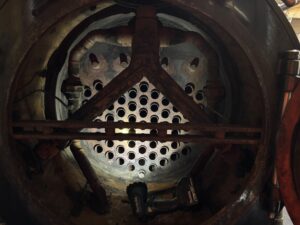 Our first task was to check both the smokebox and firebox for leaks from tubes, weeps from fusible plugs, etc.
 With a pass on both we started up Mells, removed the cap from Blyth’s chimney and drew her out of the shed and over the inspection pit.
Having confirmed there was sufficient water in both the boiler and side tanks the lighting up process commenced.
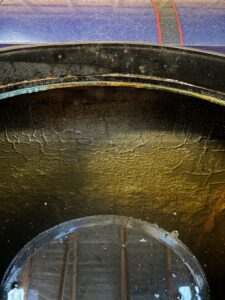
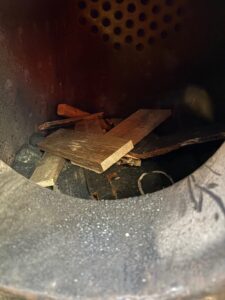 Firstly, a light layer of coal, especially in four corners of the grate, went into the firebox then lots of wood which had been kept dry in our recently erected wood shed.
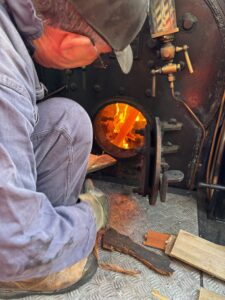 With a good bed of wood across the grate an old rag was soaked in paraffin and lit then popped on top of the wood with a little more wood added on top.
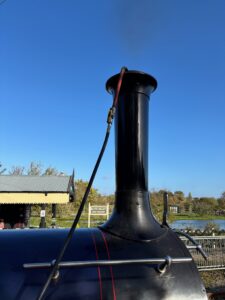 Both front and rear dampers were opened, the compressor started up and the external blower dropped into the chimney.
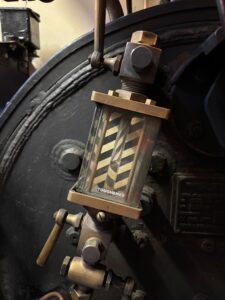
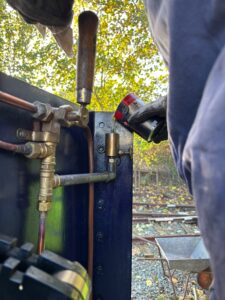 Keeping an occasional eye on the fire we attended to the lubrication – steam oil in the steam brake lubricator in the cab and the mechanical lubricator on the foot plate, then multigrade car oil into a couple of oil cans and the gradual oil round commenced.
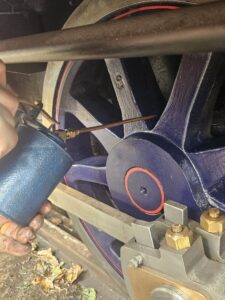 I tend to start on the left-hand side under the cab with the hand brake mechanism, progressing to the rear axle oil pot. Next come the oil pots on the connecting rod then the three oil points on the brake hanger, these are then repeated on the forward driving wheel then the slide bars and connecting rod end get a good dowsing.
The same process is followed on the right-hand side before leaning over the front foot plate to access oiling points around the left-hand side rocker link, lifting shaft and valve shafts. Then its back to the left-hand side, which has easier access, to do the right-hand side shafts. The next stage is to head under the locomotive and oil the valve gear between the driving wheels, the oil pots on the eccentrics and the brake cross shaft under the cab.
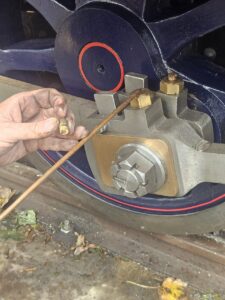 All the time we are oiling up we are keeping an eye open for loose nuts, missing split pins and anything else out of place – nothing to report this time!
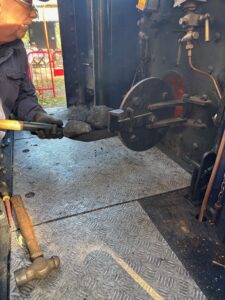 With a good wood fire burning we gradually added coal. On Sunday overall we used two wheelbarrows of wood and three 25kg sacks of steam coal – one for lighting up straight from a wheel barrow with the other two going in the left-hand side coal bunker.
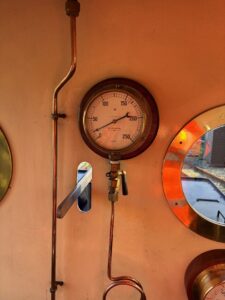 After an hour or so we found that the boiler pressure had risen to about 25psi, this is the time we pack away the external blower and introduce the locomotive blower to keep the fire drawing. This Sunday things went particularly well with regard to drawing the fire due to the blustery wind conditions.
As we would be running light engine we kept the fire relatively small spread evenly across the grate, this still provides a good deal of heat with boiler pressure remaining between 110 and 140psi throughout the afternoon which kept the safety valve from blowing off.
 With pressure nudging over 100psi it was time to check the water gauges. Going through the standard process of: close top cock, close bottom cock, open drain cock (water level drops), open then close bottom cock, open then close top cock (the differing noises confirm water or steam at each level), finally close drain cock, open bottom cock, open top cock and wait a few seconds for water level to return. Next test is the injectors, for each side: open water valve, open steam valve, feather water valve back until the injector picks up.
With all checks complete by 11:30am, there was plenty of time for those of us qualified to have some short driving stints to build our experience and confidence. This continued through the timetable running on the open afternoon, our thanks to Chris for his patience and mentoring throughout the day.